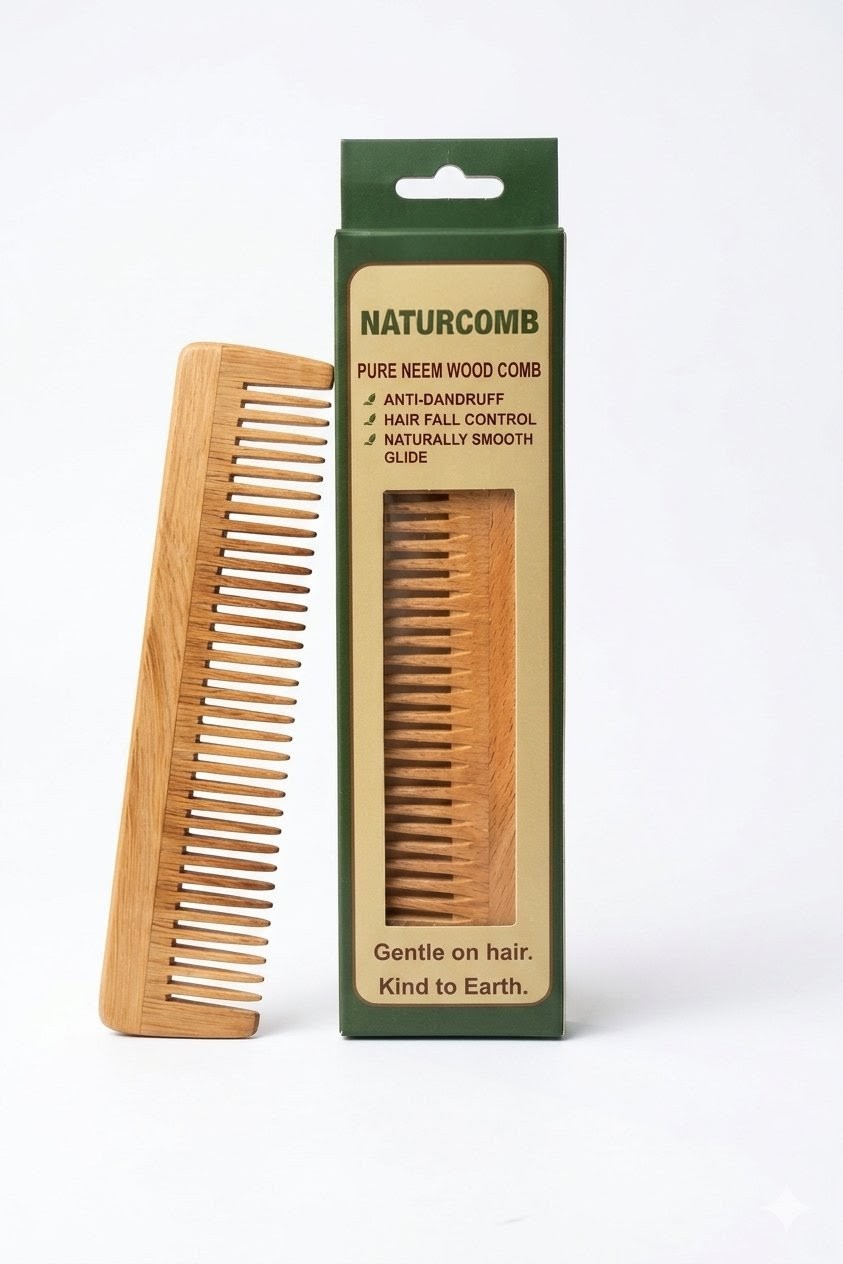
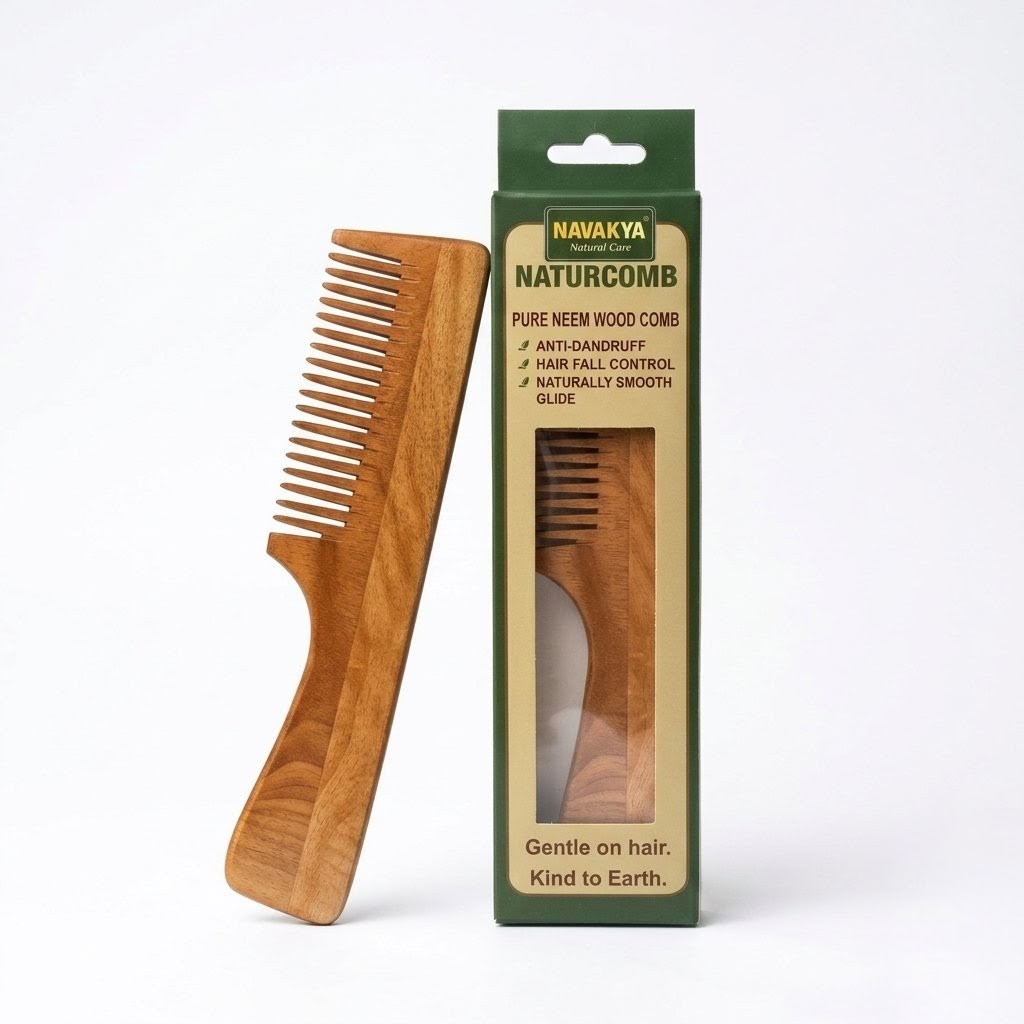
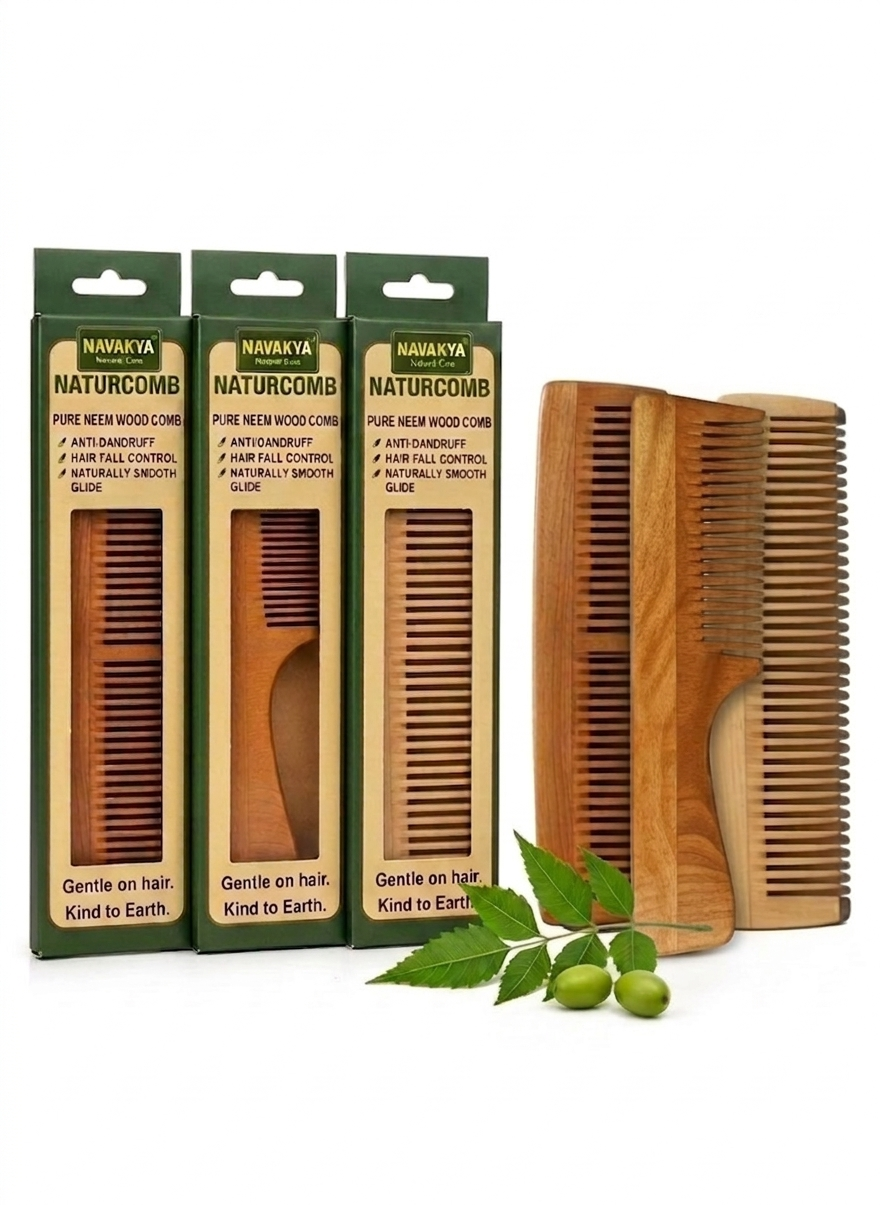
Why Wooden Combs Need Different Care
Plastic combs are non-porous and indifferent to water. You can submerge them indefinitely without structural changes.
Hardwood is an organic, breathing material. Seasoned Kacchi Neem wood responds dynamically to moisture and air humidity. When exposed to excessive water, wood fibres absorb liquid and expand; when dried rapidly, they contract, which can cause micro-cracks or warping.
However, when cared for with simple, conservative methods, a wooden comb actually improves with age. It absorbs the natural hair oils from your daily grooming, developing a protective patina and an ultra-smooth finish that feels gentler with every passing year.
How Often Should You Clean Your Comb?
- Weekly: Quick dry wipe or light clearing of trapped hair and lint.
- Monthly: Gentle damp wipe followed by natural oil conditioning.
Step-by-Step Cleaning Method
Follow this simple, 3-step routine to keep your wooden comb clean and hygienic:
1. Remove trapped hair
Before introducing any moisture, use your fingers or a soft wooden toothpick to gently lift away loose hair strands caught at the base of the teeth.
2. Wipe with a damp cloth
Moisten a soft cotton cloth with clean lukewarm water. The cloth should be damp, never dripping wet. Carefully wipe between each tooth and along the spine to lift surface dust and product buildup. For stubborn debris between narrow teeth, use a soft-bristled toothbrush lightly dampened with water.
3. Oil conditioning
Once the comb is clean and completely dry, place 2 to 3 drops of pure coconut oil, sesame oil, or neem oil onto a cloth or your fingertips. Gently massage the oil into the wood, covering the teeth and handle. Let it rest for 15 minutes, then wipe off any excess with a dry cloth.
Conditioning replenishes the wood's internal moisture balance, preventing dryness and highlighting the natural timber grain of your Classic Neem Wood Comb.
How to Dry a Neem Wood Comb
Always dry your comb immediately after cleaning. Pat all surfaces thoroughly with a dry cotton towel. Place the comb on a flat, dry surface in a well-ventilated room with the teeth pointing downward or sideways so air circulates freely around all edges.
Never use high heat, blow dryers, or direct sun to accelerate drying, as rapid moisture loss can cause natural timber to crack.
What to Avoid
To ensure your Neem wood combs last for years, steer clear of these common mistakes:
- Never soak in water: Submerging a wooden comb in a sink or bucket causes the wood to swell and weaken the tooth joints.
- Avoid synthetic detergents: Harsh chemical dish soaps and bleach strip away the natural protective oils of the wood.
- Avoid damp bathroom ledges: Do not leave your comb resting inside a humid shower stall or on a wet countertop.
How to Store Your Comb
Store your neem comb in a dry, shaded place with good air circulation. A breathable cotton pouch, a wooden vanity tray, or a dedicated drawer organizer works best.
If you own the Neem Comb Complete Set of 3, keeping them in their breathable kraft packaging protects them from bathroom steam and direct sunlight when not in use.
When Should You Replace a Wooden Comb?
A well-crafted Kacchi Neem comb has an average usable lifespan of 3 to 5 years. You should consider replacing your comb if:
- A tooth has snapped and left a sharp, jagged edge.
- The wood has developed deep structural cracks from accidental water soaking.
- The teeth have become rough and do not smooth out with oil conditioning.
For more insights into comb quality and craftsmanship, explore our Neem Wood Comb: Complete Buying Guide.
Frequently Asked Questions
What is the best oil for conditioning a neem comb?
Pure virgin coconut oil and cold-pressed neem oil are the best choices. They absorb cleanly into neem timber without leaving a sticky or greasy residue.
Can I wash my neem comb with shampoo?
If there is heavy hair product buildup, you can use a single drop of mild shampoo diluted in water on a soft toothbrush. Immediately wipe clean with a damp cloth and dry thoroughly with a towel.
Why did my wooden comb turn slightly pale?
A pale or whitish cast indicates that the surface wood fibres are dry. Applying 2–3 drops of coconut oil will instantly restore its warm amber tone and smooth surface.