Start With Your Hair Type
Hair behaves according to its unique thickness, density, and natural curl pattern. A comb that glides effortlessly through fine, straight hair may snag or struggle when used on thick, coiled curls.
Choosing the right neem comb design ensures your grooming ritual is gentle, effective, and protective of your hair's natural texture.
Best Comb for Thick or Dense Hair
Thick or dense hair has a large number of follicles per square inch. When hair is dense, fine-spaced teeth cannot penetrate through to the scalp without excessive pulling.
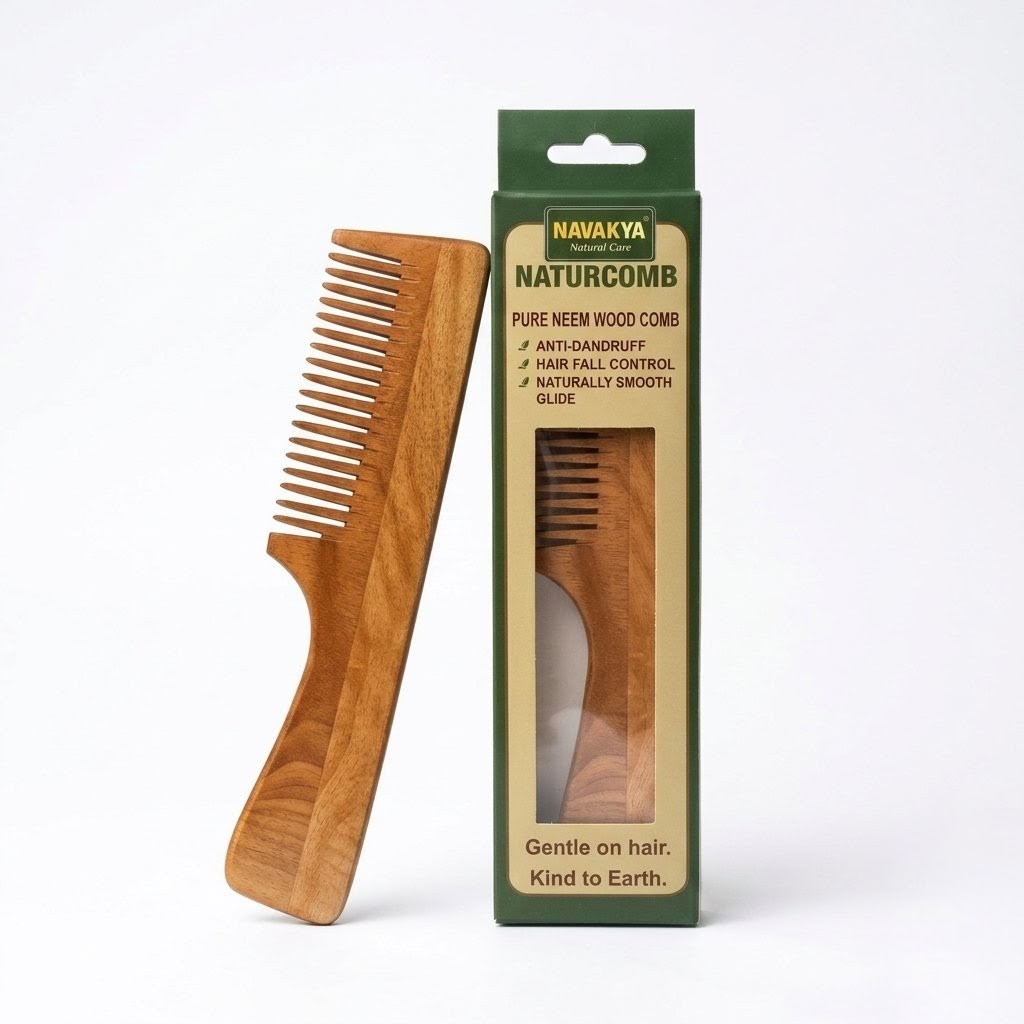
For thick hair, a wide-tooth design or the Ergonomic Handle Neem Wood Comb is ideal. The extended tooth spacing separates large volumes of hair effortlessly, while a sturdy handle gives you the leverage needed to work through thick sections comfortably.
Best Comb for Fine or Straight Hair
Fine hair has smaller strand diameters and is prone to mechanical breakage if subjected to uneven tension. However, fine hair does not need wide tooth spacing because knots are smaller and strands align easily.
A classic comb with medium or fine teeth — such as the Classic Neem Wood Comb — provides gentle, uniform contact. It aligns straight strands neatly, smooths flyaways, and distributes natural scalp oils to add a healthy, natural sheen without flattening volume.
Best Comb for Curly or Textured Hair
Curly and wavy hair is naturally drier at the ends because natural sebum travels more slowly down coiled hair shafts. Furthermore, curly hair must be combed carefully to avoid disrupting the natural curl clump structure.
A wide-tooth neem comb is essential for curly hair. The wide gaps between hand-polished wooden teeth allow curls to pass through without stretching or breaking the curl pattern. Always detangle curls when lightly oiled or conditioned, starting at the tips and moving toward the roots.
Wide-Tooth vs Fine-Tooth Designs
Understanding tooth spacing helps you pair the right tool with the right grooming task:
- Wide-tooth combs: Best for initial detangling, post-wash grooming, thick hair, curly textures, and distributing hair oils. Learn more in our guide on Wide-Tooth vs Fine-Tooth Comb.
- Fine-tooth combs: Best for precision styling, parting clean lines, smoothing straight hair, and daily maintenance on short or fine hair.
Handle vs Traditional Comb Shapes
Comb ergonomics affect control and hand comfort:
- Traditional handleless combs: Compact, versatile, and easy to carry in a bag or pocket. They allow you to hold the comb close to the teeth for fine tactile feedback.
- Handled combs: Provide an ergonomic grip and extra reach. They are especially comfortable for people with long hair, thick volume, or limited wrist mobility.
Which NAVAKYA Neem Comb Should You Choose?
| Hair Profile | Primary Recommendation | Why It Works |
|---|---|---|
| All-around daily use & straight/wavy hair | Classic Neem Wood Comb | Balanced medium tooth spacing for daily grooming |
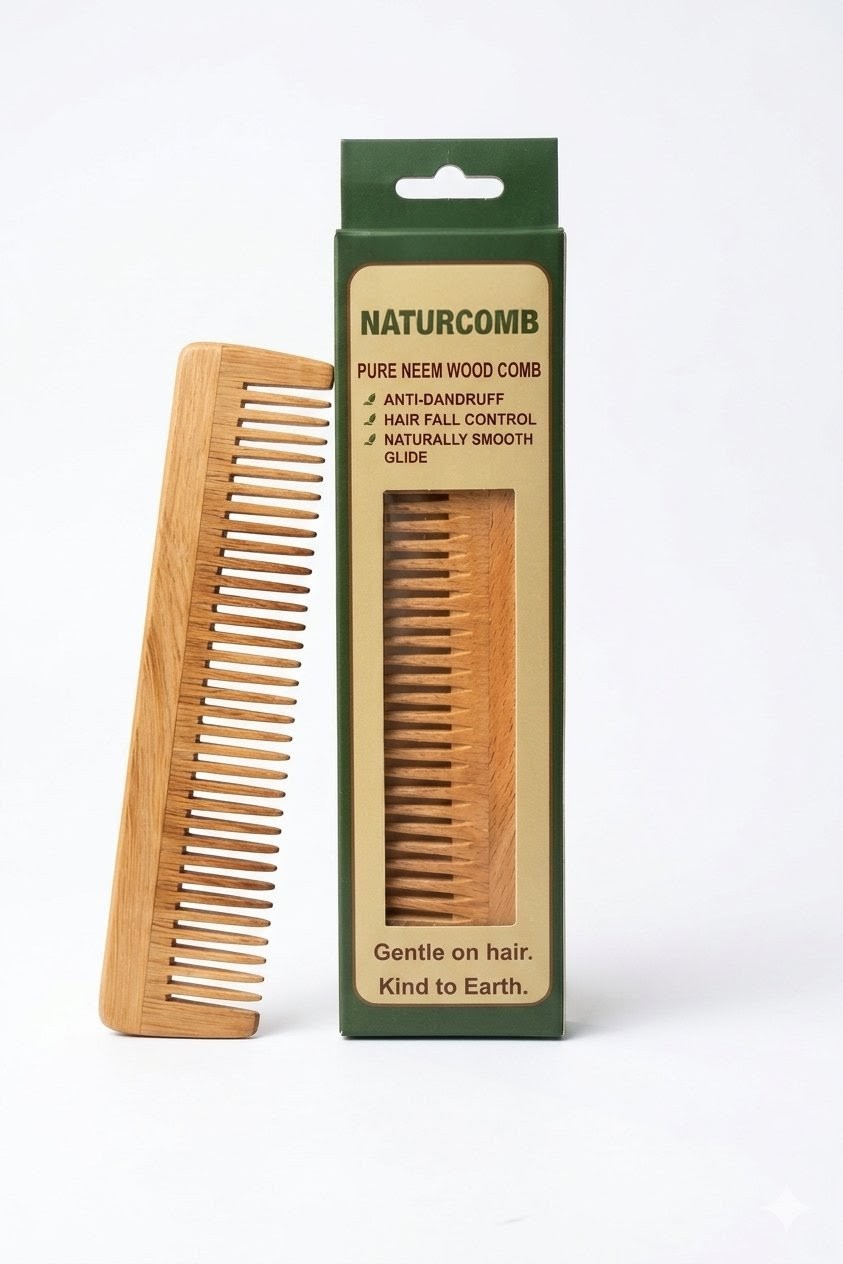
| Thick, long, or heavy hair | Ergonomic Handle Neem Wood Comb | Superior grip, extended reach, and smooth detangling |
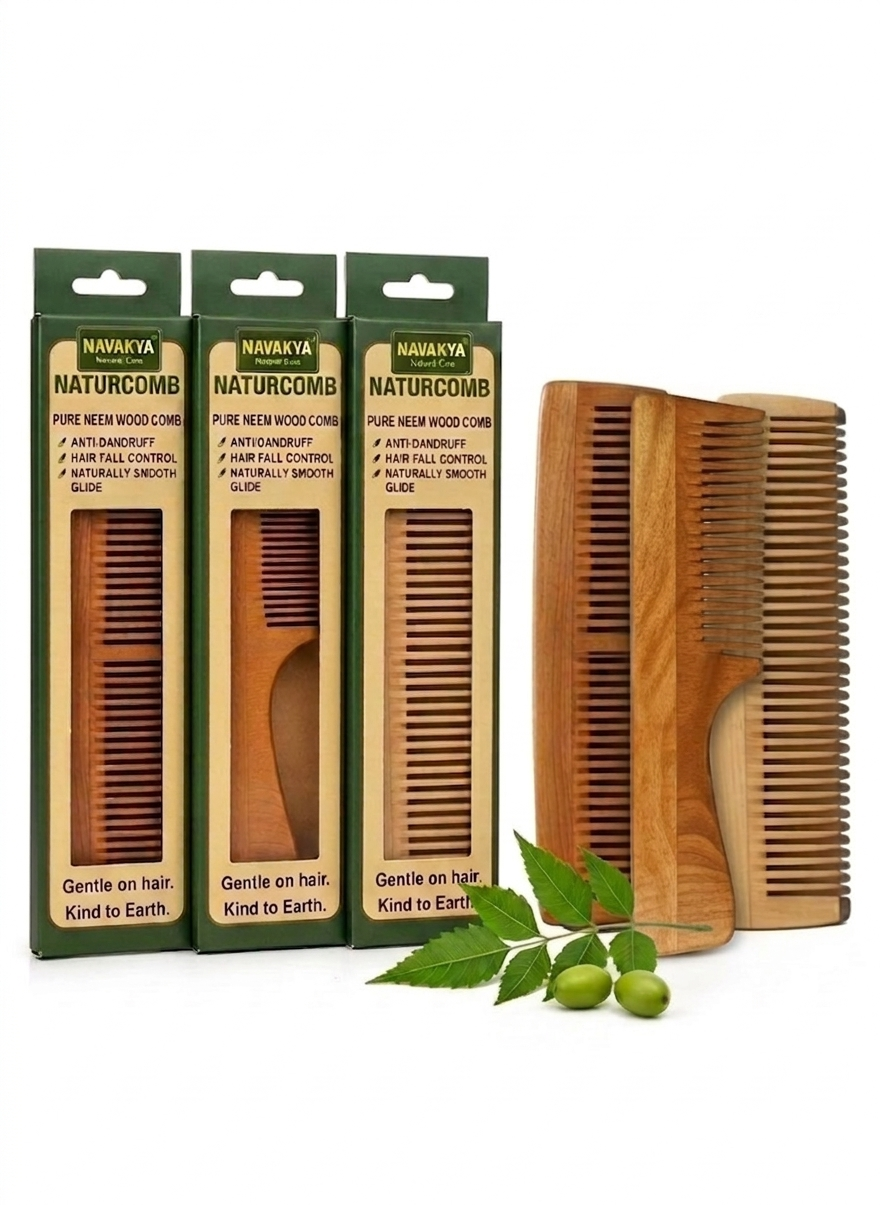
| Multi-person household / diverse needs | Neem Comb Complete Set of 3 | Full trio covering wide-tooth, fine-tooth, and handled styles |
For a complete breakdown of material selection and craftsmanship markers, visit our Neem Wood Comb: Complete Buying Guide or explore all Neem wood combs.
Frequently Asked Questions
Can one comb work for the entire family?
If family members have different hair types (such as thick curls and fine straight hair), a single comb may not suit everyone. A multi-piece set like the Neem Comb Set of 3 provides the right comb for each individual.
Should I comb my hair before or after applying hair oil?
Both! Gently comb through with a wide-tooth comb before applying oil to remove tangles, then comb lightly after application to distribute the oil evenly from root to tip.
How does wooden tooth spacing reduce hair fall?
Properly spaced, rounded wooden teeth move freely through hair without catching on tangles or exerting sharp pulling force on hair roots.