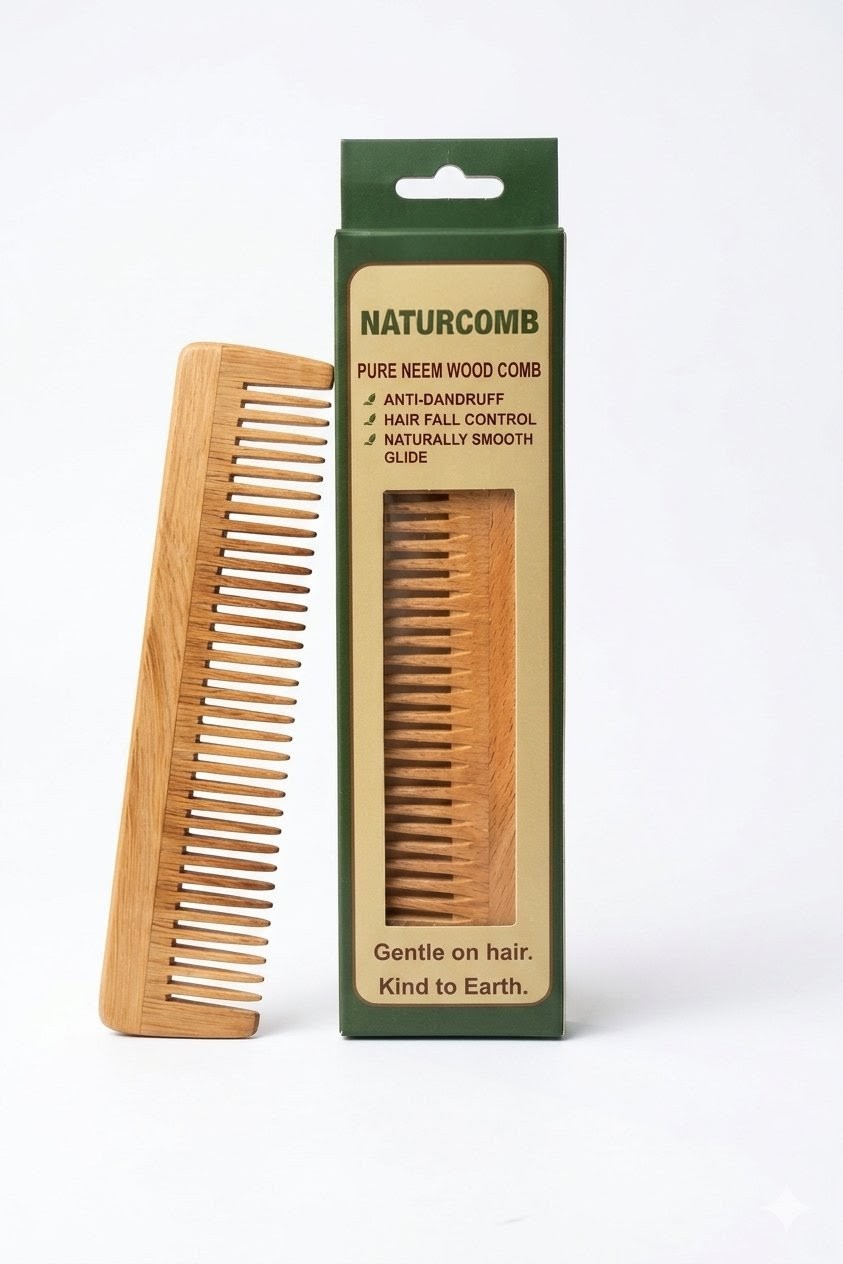
What Is a Wide-Tooth Comb?
A wide-tooth comb features teeth spaced approximately 4mm to 8mm apart. This generous spacing allows thick locks and curled strands to pass between the teeth with minimal lateral friction.
Wide-tooth combs are built for gentle detangling, managing high-density hair, and combing through damp or oiled hair without straining delicate strands.
What Is a Fine-Tooth Comb?
A fine-tooth comb has closely aligned teeth spaced 1mm to 2mm apart. This close spacing creates uniform tension across individual hair strands, smoothing the cuticle layer and gathering hairs into neat, cohesive alignment.
Fine-tooth combs excel at precision grooming, creating clean hair parts, styling short hair, and smoothing flyaways for a composed finish.
Wide-Tooth Combs for Thick or Textured Hair
Thick, curly, and coily hair structures are naturally prone to knots where strands cross and twist. Forcing a fine-tooth comb through dense curls creates excessive resistance, pulling at the roots and potentially breaking strands.
A wide-tooth neem comb separates tangled curls progressively. Because the hand-polished teeth glide smoothly without static, they preserve natural curl clumping while easing knots apart from the ends upward.
Fine-Tooth Combs for More Precise Grooming
For individuals with straight, fine, or short hair, wide teeth can feel too loose to manage styling. A fine-tooth comb gathers delicate strands evenly, helping to distribute natural scalp sebum from roots to tips.
It is also the essential tool for creating crisp, straight partings or preparing hair for neat braids and updos.
Which Design Is Better for Different Hair Types?
| Grooming Need | Recommended Comb Design | Why |
|---|---|---|
| Wet or damp hair detangling | Wide-tooth | Protects fragile, water-softened strands from tension |
| Thick, coarse, or curly hair | Wide-tooth | Glides through volume without snagging or breaking curls |
| Straight or fine hair | Fine or medium-tooth | Provides gentle tension for smooth, polished alignment |
| Oiling & scalp treatments | Wide-tooth | Distributes oils evenly across the scalp without dragging |
| Sectioning & parting | Fine-tooth | Delivers exact precision for clean lines |
| Daily morning styling | Medium or dual-tooth | Balanced for light detangling and smooth finishing |
How to Choose a Comb for Everyday Use
For most daily routines, a two-step approach works best:
- Detangle first with a wide-tooth comb to release major knots without stress.
- Style and smooth with a fine or medium-tooth comb to set your part and smooth the surface.
If you prefer a versatile single comb for daily grooming, the Classic Neem Wood Comb features versatile medium spacing that handles both light detangling and neat styling.
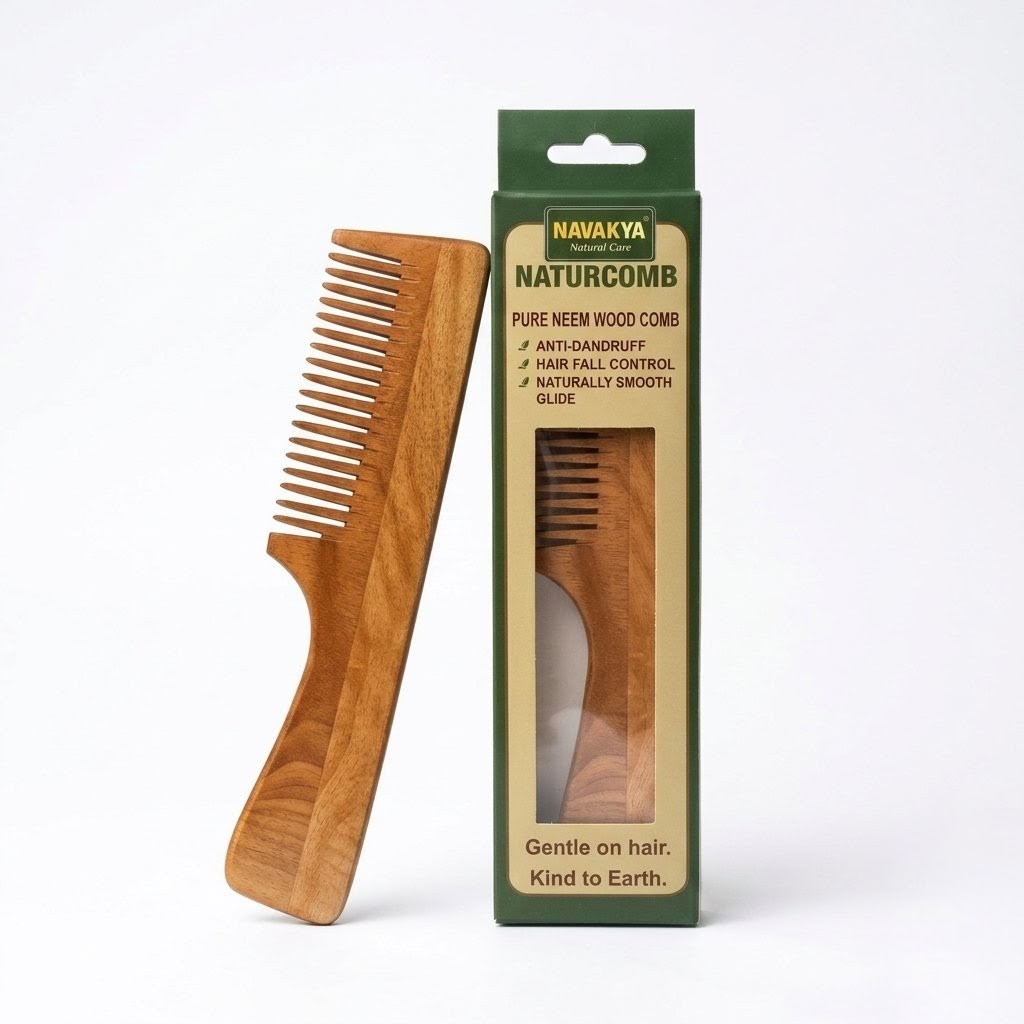
If you have long or heavy hair, the Ergonomic Handle Neem Wood Comb offers comfortable leverage during detangling.
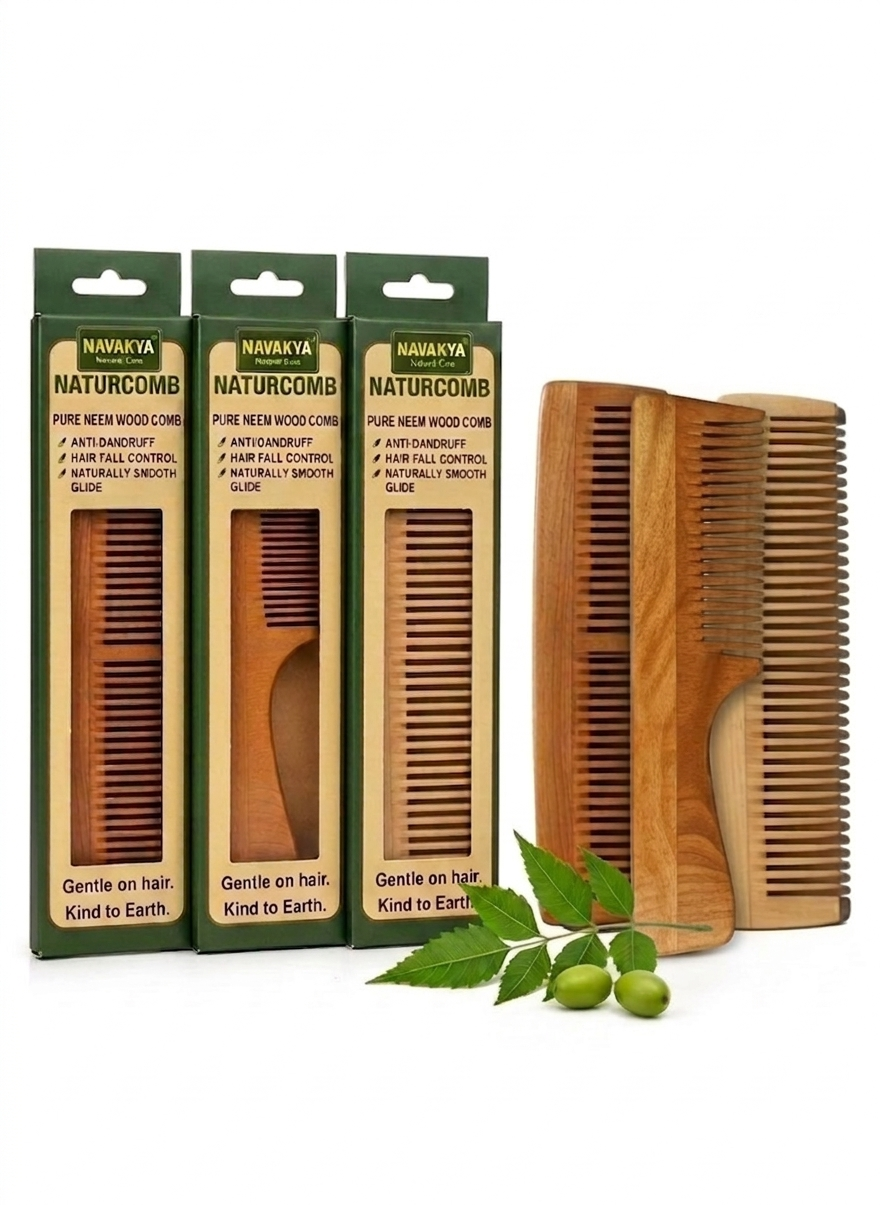
To keep all comb styles on hand for every stage of your hair routine, the Neem Comb Complete Set of 3 provides wide-tooth, fine-tooth, and handled combs in one coordinated set.
Explore our related guides on How to Choose the Best Neem Comb for Your Hair Type, How to Clean and Care for a Neem Wood Comb, or read the comprehensive Neem Wood Comb: Complete Buying Guide.
Frequently Asked Questions
Can I use a fine-tooth comb to detangle knots?
We advise against detangling with a fine-tooth comb. Fine teeth grip knots too tightly, which can lead to strand breakage. Always start detangling with a wide-tooth comb and switch to fine teeth only after knots are cleared.
Is a wide-tooth comb suitable for straight hair?
Yes. A wide-tooth comb is ideal for straight hair immediately after washing or oiling, when hair is vulnerable to tension.
How do I prevent wooden comb teeth from catching in my hair?
Always choose hand-finished combs crafted from single-piece hardwood with rounded tips. Clean your comb weekly and oil it monthly to ensure the wood remains smooth.