Neem Wood vs Plastic: What's Actually Different?
Combs are among the few personal grooming tools that touch our hair and scalp multiple times every single day. Yet most people give little thought to the material passing through their hair.
Plastic and neem wood are fundamentally different substances. Plastic is a synthetic, petroleum-derived polymer moulded at high speed. Neem wood is a dense, organic hardwood shaped and hand-finished with natural oils.
Material and construction
Mass-produced plastic combs are formed in injection moulds. This manufacturing process leaves tiny plastic seams and micro-ridges along the edges and tips of the teeth. Under magnification, these seams act like microscopic saws against delicate hair cuticles.
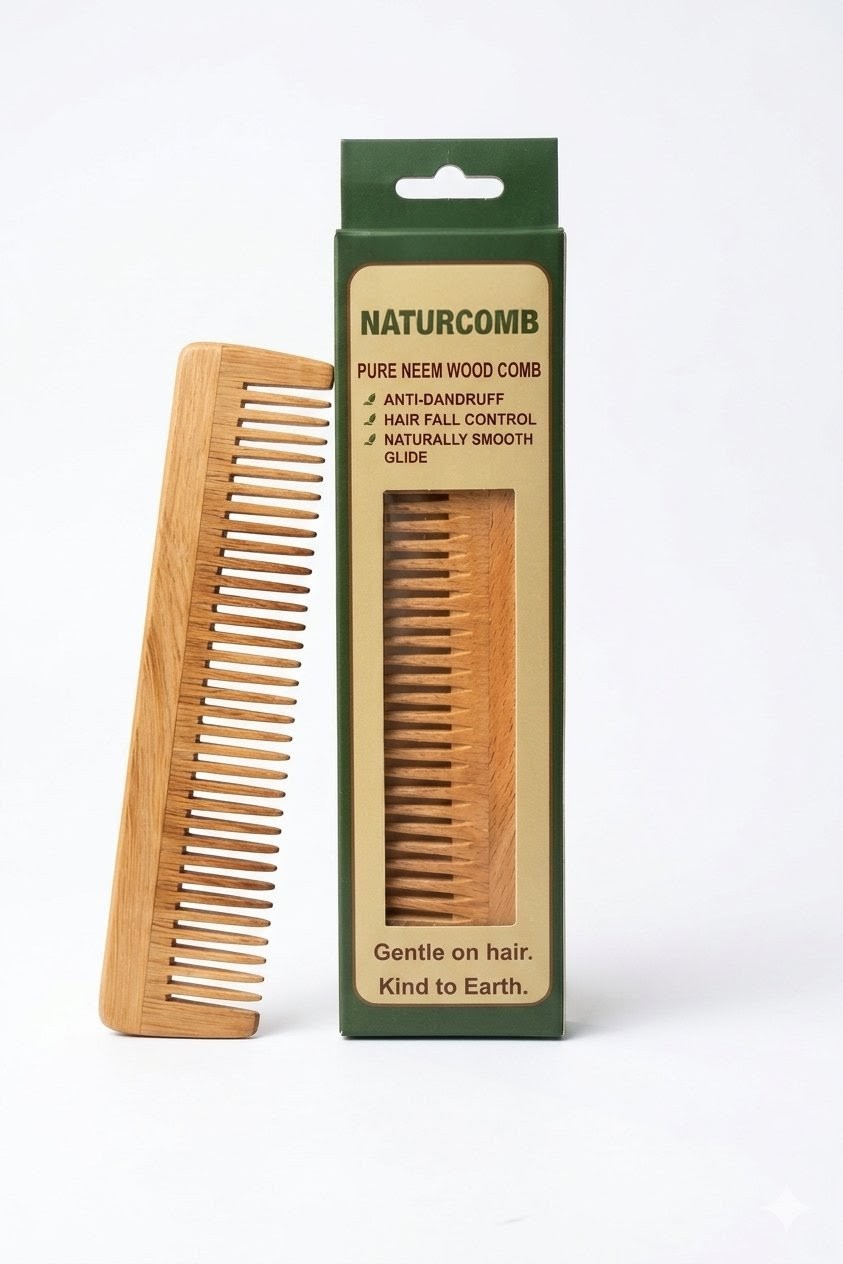
In contrast, handcrafted Neem wood combs are carved from single pieces of seasoned Kacchi Neem. Each tooth is smoothed and rounded by hand, eliminating jagged flash lines and creating an even surface that passes through hair strands without snagging.
Tooth design
The structure of comb teeth defines how much tension hair experiences during grooming. Plastic teeth are flexible under load, but their sharp moulding seams create drag. Neem wood teeth are rigid, smooth, and gently rounded at the tips. This structural rigidity allows the teeth to separate hair sections cleanly without scraping the sensitive skin of the scalp.
How Each Comb Feels During Everyday Use
The sensory experience of using a comb is immediately noticeable. When you run a plastic comb through dry hair, the light, hollow feel and familiar snapping sound are characteristic signs of static tension.
A neem wood comb provides a warm, grounded tactile feel. The comb carries a natural weight that guides itself downward through hair sections, requiring less manual pressure from your wrist and fingers.
Static and everyday grooming
Static electricity is governed by the triboelectric effect. When two insulating materials like plastic and dry keratin hair rub together, electrons transfer between them, building a positive electrical charge. This causes individual strands to repel each other, producing frizz and flyaways.
Wood is an organic material with low electrical conductivity. It does not generate static charges during regular combing. Strands stay aligned and calm, which makes wooden combs especially beneficial during dry winter months or in air-conditioned environments.
Static, Detangling and Hair Care
Detangling is where mechanical hair stress most frequently occurs. Pulling a plastic comb through knots forces tangled hairs against sharp moulded edges, often stretching strands past their elasticity limit.
Because Neem wood combs are anti-static and smooth, they glide between tangle knots rather than binding against them. The smooth wooden surface also helps distribute the scalp's natural sebum evenly along the length of each strand, providing a light, natural protective coating from root to tip.
Which Comb Works Better for Different Hair Types?
Thick or dense hair
Dense hair requires structural strength to penetrate through multiple layers. Flexible plastic teeth often bend or deflect against thick hair, forcing the user to press harder. A wide-tooth neem comb or the Double-Sided Neem Comb parts heavy sections cleanly without flexing or warping.
Fine or straight hair
Fine hair is particularly vulnerable to friction-induced snapping. The seamless, polished teeth of a fine neem comb align delicate strands gently without pulling or causing static puffiness.
Curly or textured hair
Textured and curly hair needs wide spacing to preserve natural curl clumps and wave patterns. Wide-spaced neem teeth allow curls to glide through without snagging or breaking the natural curl definition.
Environmental Considerations
Every year, millions of disposable plastic combs end up in municipal landfills and waterways. Because they are composed of mixed polymers and are small in size, standard recycling facilities cannot process them. They persist in ecosystems for centuries, breaking down into microplastics.
A neem wood comb is 100% biodegradable and derived from sustainably harvested, renewable neem trees. At the end of its multi-year lifespan, it returns harmlessly to the earth without chemical residue.
How to Choose Your Everyday Comb
For a dependable, single-comb routine, the Classic Neem Wood Comb is the ideal foundation. It offers balanced tooth spacing suitable for daily grooming and light detangling.
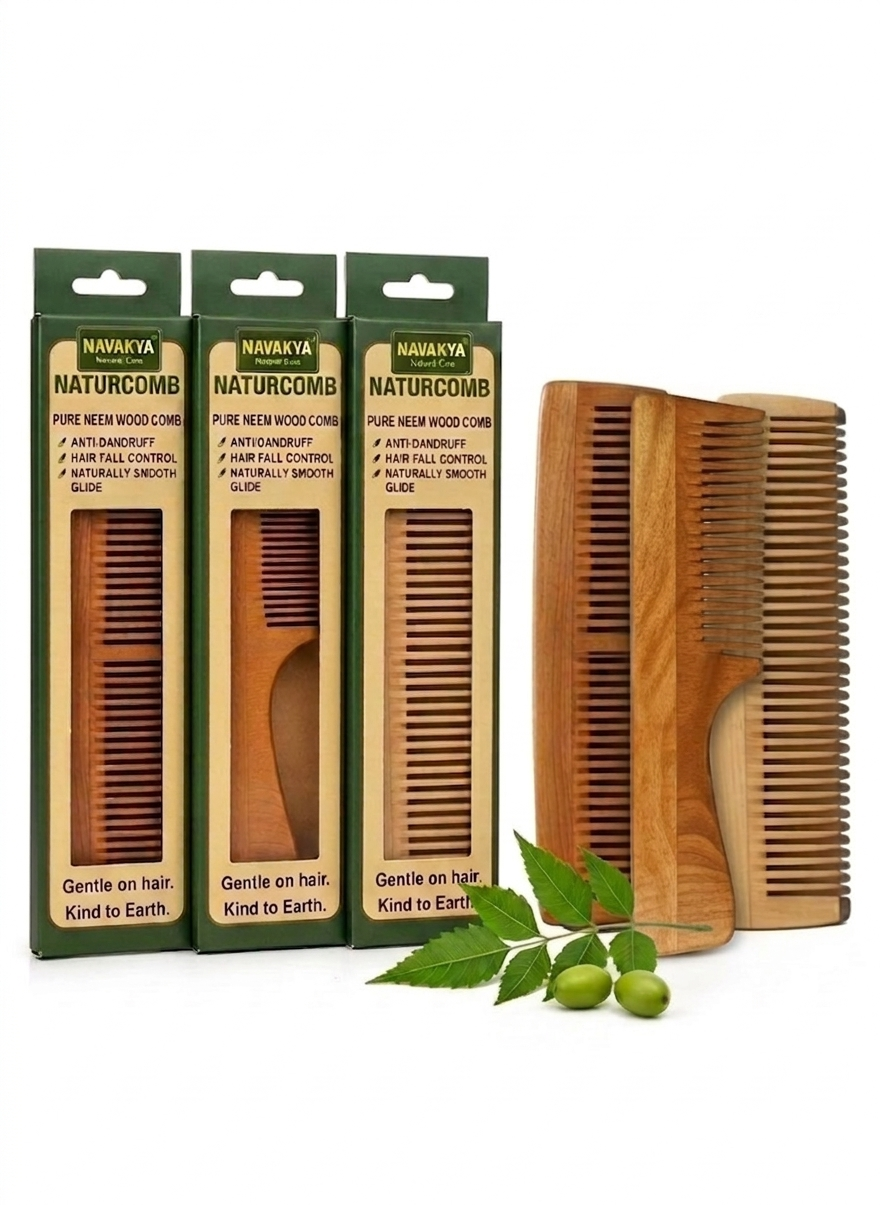
For families with diverse hair textures or individuals who prefer dedicated detangling and styling tools, the Neem Comb Set of 3 provides a complete set of wide-tooth, fine-tooth, and handled options.
To learn more about wood grading, craftsmanship, and tooth selection, read our Neem Wood Comb: Complete Buying Guide.
Comparison Summary
| Feature | Plastic Comb | Neem Wood Comb |
|---|---|---|
| Material | Synthetic petroleum polymer | Natural Kacchi Neem hardwood |
| Static Generation | High (causes frizz & flyaways) | Zero static |
| Tooth Surface | Moulded seams and rough edges | Hand-polished, smooth tips |
| Scalp Contact | Can feel sharp and abrasive | Gentle, rounded massage feel |
| Sebum Distribution | Poor (oil clings to plastic) | Natural, even distribution |
| Durability | Becomes brittle with UV exposure | Improves with use; lasts 3–5+ years |
| Environmental Impact | Non-biodegradable landfill waste | 100% biodegradable & renewable |
Frequently Asked Questions
Can I use a neem wood comb on wet hair?
We recommend using a wide-tooth neem comb on damp, towel-dried hair rather than soaking wet hair. Hair is most fragile when saturated with water, so always comb gently starting from the ends and moving upward.
Does a neem wood comb smell like neem oil?
A genuine neem wood comb has a faint, pleasant, woody scent characteristic of seasoned neem timber. It does not carry a strong or bitter medicinal odour.
How do I clean my neem wood comb?
Wipe the comb weekly with a dry or lightly damp cotton cloth to remove dust. Once a month, rub a few drops of natural coconut or neem oil across the teeth to keep the timber nourished. Avoid soaking in water.
How long does a neem wood comb last?
With basic monthly oiling and dry storage, a quality Kacchi Neem comb easily lasts 3 to 5 years of daily use.